Showing posts with label G321 Thriller research. Show all posts

Saturday, 17 March 2012

Animal Kingdom

In David Michod's stunning thriller bringing old styled suspense and mixing it with beautiful cinematography, thus creating a masterpiece of its age. The film consists of some very generic conventions, for example the ambiguous nature of Pope resembles that of Bill in Kill Bill, Harry Lime in The Third Man and also the man in the shower scene of Psycho. All of these characters are very stereotypical of the thriller genre, they are the building blocks for mysterious thriller. Without enigma the film would seem to rushed and anti-climactic whereas with the use of enigma films tend to have an uneasiness about them which makes the hairs stand up on the back of your neck.


The use of dim ambient and non-ambient lighting is very effective throughout the film. The scene when Pope is carrying J's dead girlfriend the mise-en-scene combined with beautiful camera angles, non-diegetic sounds and narrow dim lights helps illustrate the swell of emotions between the characters, this is clear to the audience.


The film seems to appeal mostly towards seventeen to eighteen year olds. This may be because the film follows a young boy who faces issues felt by teens/youth, yet the film also tackles controversial taboos like drugs, crime and even love without being cliché. Another reason why the film attracts a teen audience is because it isn’t too patronising, the twists and turns throughout the film leave themselves unexplained which enables the viewer to engage with the film.


The film challenges common thriller conventions, for example the killing in the car park. This wide open space rejects all common thriller settings and helps illustrate how the police force have no moral boundaries and will show no retaliation. There is also an inter-textual reference between this killing and the killing of Melanie in Tarantino’s Jackie Brown. The wide open spaces, the extreme ambient lighting, it almost gives a feeling of realism to the scene.


J’s underacting gives another sense of realism to the film, showing the true nature of common teenagers. Also this continual silence could also represent J’s innocents whilst he is surrounded by a family driven by crime.
 The title of the film "Animal Kingdom" is wierdly rienforced by the Incestuous nature of the mother, this helps represent the unity within the family like a pack of lions in the wild.


Monday, 20 February 2012

Psycho (1960)

Director : Alfred Hitchcock


Psycho is a iconic 1960's thriller, it's noir styles helps show a realisation of events happening behind the scenes of the hippie movment during the 1960's. The film connotes generic aspects of the thriller genre, for example the very dim lighting and use of enigmatic figures to create suspense.  

The iconic shower scene shows the great diversity of Alfred Hitchcocks film knowledge applyed to such a challanging genre. The non-diegetic music helps creates suspense with a dark obscure feel. In this scene  Marion Crane is in a rough dimly light shower room, this confinment is a common thriller convention. At 0:45 in the clip a figure is presented behind the shower curtain, the blurred figure fills the audience with fear. The use of Enigma helps build suspense and says everything about the male character, also the blurry shower curtain makes it look like the two characters are submerged in water one being prey and the other the mysterious predator.  As the scene progresses the speed of the shot cuts quickens to add suspense to the scene, also it adds an element of confusion as if we are witnessing the murder for the girls point of view.  
Another way the Alfred Hitchcock establishes suspense and terror is through extremely fast jump cuts. These extremely fast close ups create a sense of confusion and also energy withing the piece.

Tuesday, 7 February 2012

Survey...

Survey


I intended to find out the most popular film genres between different age groups and see what age group was most interested in thrillers and target my film at them. The pie charts are arranged in age order.


For the under 10’s category there isn’t really much variety, this is due to the knowledge that implants will not understand the complex storylines of thrillers and horrors, yet also there is a age restriction on many complex films which may challenge views that children haven’t confronted at such a young age.


For the 10-15’s there is still a problem with age restriction to the form of films the can view. Yet due to the internet teenagers are able to watch films illegally online for free, this is a factor which is damaging the amount of people who go to the cinema. From the pie chart it is obvious that the main film genre watched is action films, this may be because they are heavily advertised on internet sites such as Facebook and Bebo commonly used by teens.


As shown above in the 16-21 categories it is obvious that there is a wide variety of film genres consumed. Information from the IMDB shows that Thrillers and Action films are the most heavily watched by 16-21, and this information is backed up by the pie chart. Looking at this data the target audience would been 16-21 year olds, this means that to gain attention I will need to research clothing and common stereotypes of 16-21 year olds. This won’t be challenging because I am currently 16 and understand what people my age find interesting in film.


This pie chart shows that 22-30 year olds most commonly watch intellectually challenging films, with the exception of comedy. The reasons for this may be that people of this age group are not amused by childish animations whereas they like controversial storylines, or in this case laid back comedies. This age group is very diverse.


            The 31-45’s are less widely diverse compared to 22-30’s. The pie chart shows that the most watched genre is Thriller, this may be because it stimulates the mind and challenges common conceptions on issues raised within society, for example Crime, Prostitution and Gangs.


This pie chart shows that people above the age of 45 enjoy watching very old well filmed movies. Western films were commonly made in the 1950’s all the way through to the 1980’s.


Undergoing this survey has helped me realise that the Thriller genre is for the more intelligent minded 16 onwards, this may be because they will understand the issues presented and understand what the camera angles, costumes and location represents.

Monday, 30 January 2012

part two taxi driver :)


Taxi Driver
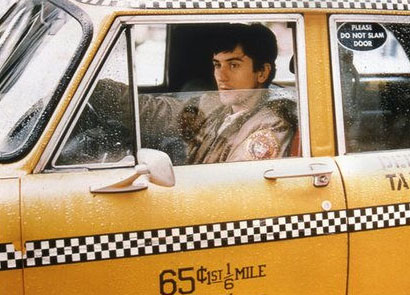
The first shot in taxi driver beautifully portrays the thriller genre with the extreme low close up on the car, giving it an eerie presence like the killer shark in jaws. Also the smoke screen with the non-ambient lighting gives a sense of isolation and distance from society. Also because of the background of Travis the main character and his involvement in the Vietnam War the smoke could represent the barrier he is facing attempting to engage with modern life.


The extreme close ups on Travis’s face cutting to the out of focus shots of blurred traffic from within the car also connotes his feelings of distantness after the Vietnam war and the car windscreen shows his internment and his solitary personality. The constant flashes of red and blue shows the environment around him is corrupt and governed crime.


The taxi is used effortlessly to help show Travis’s confinement, as if the cab is a barrier protecting him from the harsh nature on the outside world, this is similar to the use of a car in Essex Boys to represent confinement. New York in 1976 was filled with guns, crime, sex and the birth of the WTC. It is easy to see Travis’s frustration gradually build. The film is set out so the viewer engages with the ex-war veteran; this was beautifully done by adding narration addressing issues of the current time. Narration is commonly used in thrillers because it can produce a feeling of loneliness and isolation which is overwhelmingly effective in Taxi Driver. The sense of isolation and lack of communication throughout re-enforces the fact that Travis’s is struggling to cope with modern life,  this technique of isolation has been used by many directors like Carol Reed in a third man with the winding dark streets and also by Quentin Tarantino in pulp fiction where there is little communication with the outside world.


At 4:53 there is a panning shot which looms over the contents of Travis’s flat to reveal bare walls and the bare necessities needed for living. The use of dim non-ambient lighting also creates a feeling of claustrophobia within the room which is a common convention in thrillers.


This reinforced the idea of Travis's loneliness. Also another factor that is key in a thriller film in my opinion is 'main character narration'. This is a key convention which allows the audience to relate and even feel as if they are the main character within the film. This technique is used whilst Travis is writing home to his family telling them lies of a wonderful city life filled with joy and money, this engages the audience with his insecurity and feelings incompetence towards his family. Other examples when this technique is used is in Essex Boys which enables the audience to relate/engage with main character Billie. This is also used in the psychological thriller American Psycho, which entwined with the non-dietetic soundtrack helps the viewer enter the mechanics of Patrick Bateman which was purposefully done to help illustrate the complex workings of a murderer. Throughout    the film the ever darkening Mise en scene helps portray New York as a labyrinth  in which Travis is submerged.

Throughout the film there never seems to be a familiar location, which also gives the feeling of a dream like city. Director Martin Scorsese may `have done this because it resembles the maze like nature of noir thriller 'A Third Man' set in Vienna. In 'A Third Man' the use of foreign languages and no subtitles helps the audience feel asif they are in Holly Martins shoes, which helps viewers engage and truly understand the film.  

Tuesday, 24 January 2012

THE LOOK

THE LOOK
For our thriller we decided to go for a look which was modern with some of the up and coming trends. We were aiming for a costume not to dissimilar to the ones in Shane Meadows ‘This Is England’. This style is a cross between Punk/Mod/Skinhead. Despite being fashionable in the 1970’s we thought that it would bode well with the old gritty look we wanted for our film. It is obvious that the film ‘This Is England’ started of a trend which has now branched to mainstream brands such as Topman and River Island. We decided to use this style because it’s what the teens today are wearing, which means the audience will be able to relate to our main character. This look is currently very popular in the current trend and shows tribute to how Shane meadows has also carried out his mise en scene throughout all his films, especially 'This is England' which represents how a culture at that period of time can now have a knock on effect through the use of bringing it back through films and cinematography.


For the father the costume would be along the similar lines as the punk/mod/skinhead look but with a more modern twist incorporating the classy Harrington with the contemporary skinny jeans and tight checked
shirts. This classy look will show his wealth and status within society, this is like Ordell in Quentin Tarantino’s ‘Jackie Brown’, The difference is Ordells look is much more Americanized, whereas our look comes from the roots of London!
This costume design will help us achieve the modern yet gritty look we want for our final piece. Another example to help illustrate the look we are after is in the music video for ‘When the sun goes down’ by the renowned Arctic Monkeys.  The cinematography of the piece in cooperation with the mise en scene and costume adds to the overall mood of the piece, which is what we would like to achieve in our thriller.

Tuesday, 17 January 2012

Enigma

Generic conventions of enigma
The use of an ‘enigma’ will be present in nearly every thriller film you watch. It is a common convention which is extremely effective in drawing in the audience’s attention and also great amounts of suspicion. The definition of ‘enigma’ is “One that is puzzling, ambiguous, or inexplicable.” There are two different forms of ‘enigma’.
1)    Personal- This is when someone’s face may be hidden, yet many other personal objects may be shown which create assumptions of a character. An example of this is in Kill Bill where Bills face is never in shot, yet the camera focuses on his large rings and egotistical napkin with his own name on it which shows Bill thinks a lot of himself.


1.5) Personal Enigma is also created in the Danish T.V thriller ‘The killing’. During the program you are always second guessing who the killer is. The director Patty Jenkins made sure that 20 day long series would keep the audience on there toes, and this was achieved by the subtle clues and red herrings which were left for the audience to decipher after each episode. Many characters were purposely portrayed as villains by creating ‘enigma’ where they were just a mask to cover the true villain.


2)    Objects- this is when an object causes assumptions of even suspicion. Common objects are white vans in Essex Boys (Terry Winsor), car boots used in Jackie Brown (Quentin Tarantino) and also the notorious brief case in Pulp Fiction (Quentin Tarantino). Throughout pulp fiction there is always an element of suspicion of what is inside the black brief case, and this is built by the characters reactions on screen.